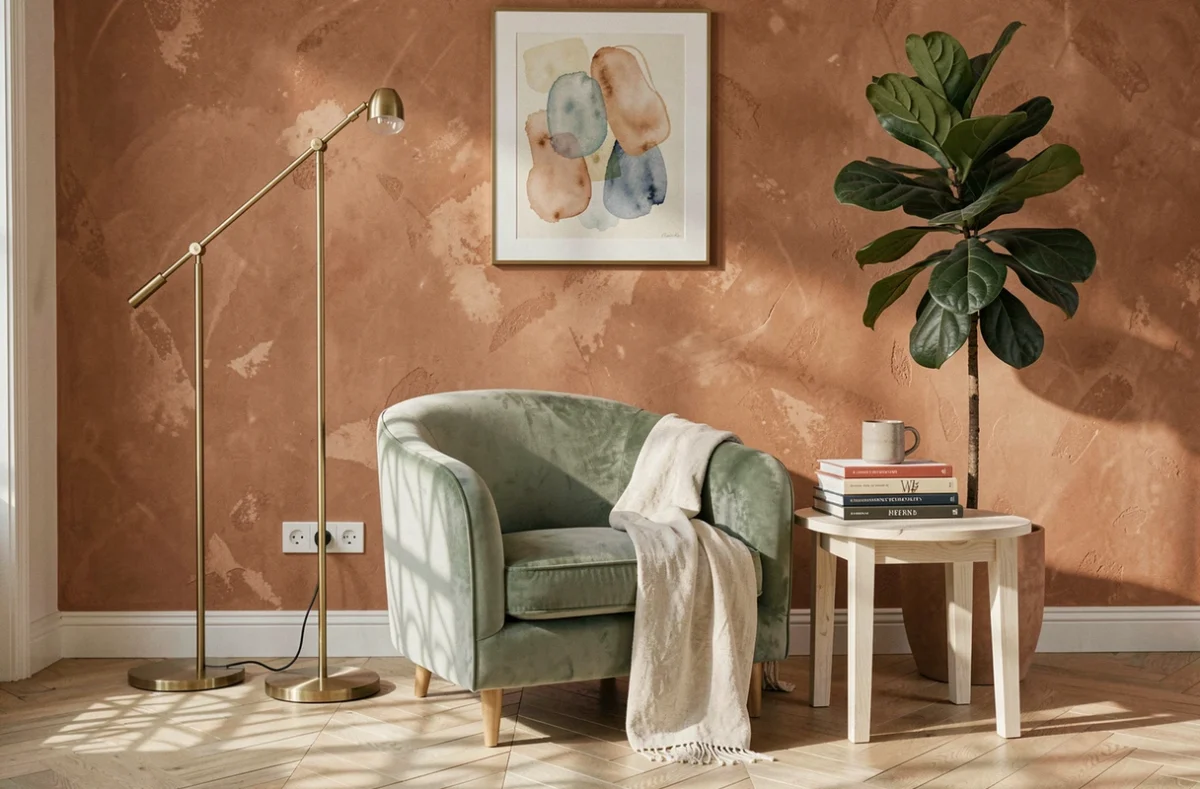
Transforming an interior is about more than choosing a color palette or following the latest trends. The real question is measurable: which changes make a visible difference to a room, and which are merely cosmetic tweaks? By combining insights from design professionals with data on materials, we can prioritize the choices that matter.
Interior design materials: comparing visual impact
Not every element in a room carries the same weight in how we perceive a space. Wall coverings, furniture and textiles affect the atmosphere to very different degrees.
| Design element | Surface or volume affected | Impact on how the room feels | Time before it feels dated |
|---|---|---|---|
| Wall paint | All the walls | Very high (dominant color) | Varies depending on the shade |
| Flooring | Entire floor | High (texture, warmth, acoustics) | Long (durable material) |
| Main furniture (sofa, table) | Central volume of the room | High (defines the space) | Medium to long |
| Textiles (curtains, cushions, rugs) | Localized | Moderate (color accents, patterns) | Short (easy to update) |
| Decorative objects and accessories | Localized | Low to moderate (personality) | Short |
This table highlights a point that is often overlooked: walls and floors make up most of a room’s visible surface. Changing a wall color has a greater effect on the atmosphere than adding ten cushions to a sofa. Accessories add personality, but their visual impact remains limited if the large surfaces (walls, floor) have not been addressed first.
Professionals working on Cherry Déco’s interior design follow this principle: start with the room’s volumes and surfaces, then move on to the details.
Indoor air quality and paint choices: an overlooked design consideration
Choosing paint is about more than color. ADEME notes that wall finishes affect indoor air quality. Volatile organic compounds (VOCs) released by some paints can linger for several weeks after application.
This technical consideration has a direct impact on comfort in the room. Low-VOC paint helps protect indoor air quality without compromising on appearance. Regulatory labels (ratings A+, A, B, C) make it possible to compare products before buying.
In terms of aesthetics, low-emission ranges now offer as broad a spectrum of colors as conventional paints. Choosing between deep blue and terracotta no longer depends on the product’s chemical composition, but on the style you’re looking for.
Reusing furniture and materials: character and precautions
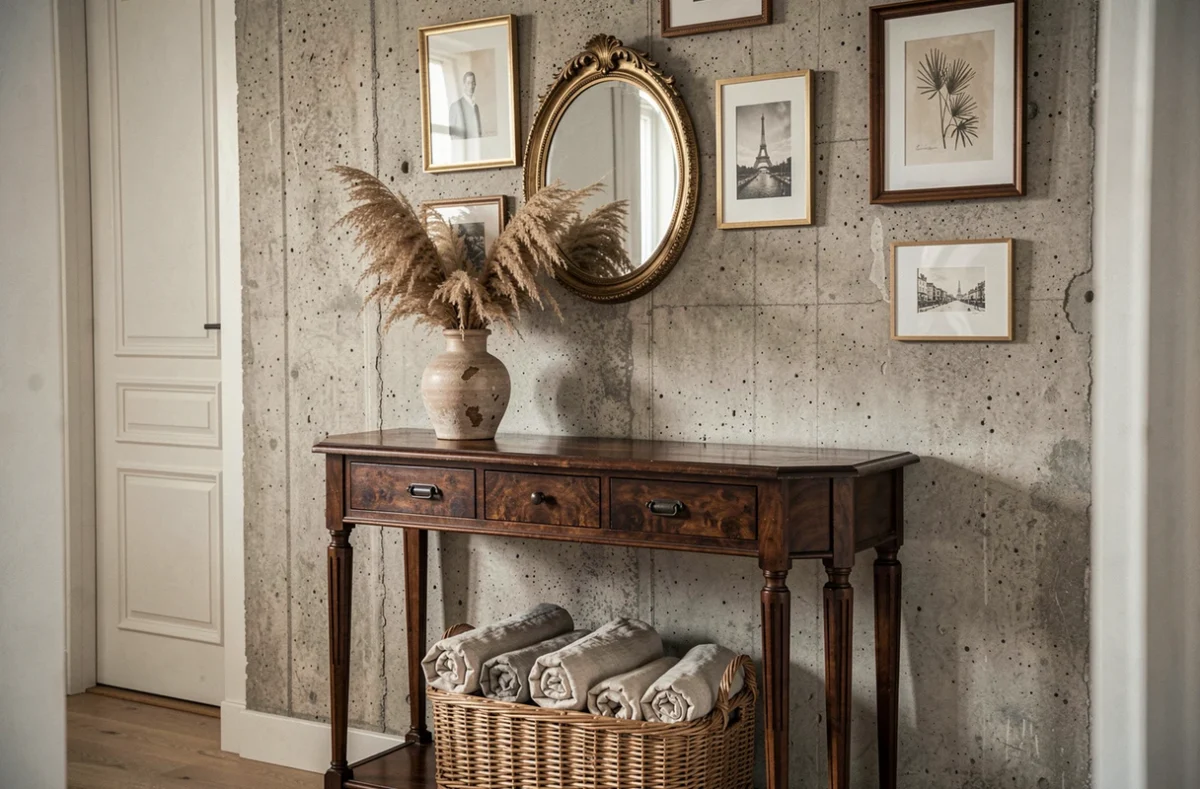
Incorporating second-hand furniture or reclaimed materials is still one of the most direct ways to give a space personality. A vintage dresser, old tiles used as a backsplash, exposed beams salvaged from a construction site: these elements create a distinctive look that no catalog can replicate.
ADEME describes a reuse sector that is gradually taking shape in France, though progress varies across industries. For interior design, this means taking a few practical precautions:
- Reclaimed construction materials (bricks, tiles, woodwork) need to be assessed before reuse. Their appearance alone does not guarantee that they are suitable for their intended use, and treatment may be necessary.
- Old furniture may have lead-based or harmful solvent finishes. It needs to be stripped appropriately before being used again in a living space.
- Choosing furniture that can be repaired and disassembled makes it easier to adapt to changing needs without replacing everything. This approach to durability is part of a broader circular economy.
The benefits go beyond style. A reused piece of furniture, properly checked and restored, tells a story that new furniture cannot. It’s a design choice that also reflects a particular relationship with time and resources.
Thermal comfort and textiles: decorating with the seasons in mind
Summer comfort is a design consideration that is rarely taken into account. Textiles, finishes and the way natural light is managed all help regulate a room’s temperature during hot weather.
In practice, this means choosing curtains is about more than patterns or color. Thick blackout fabric blocks direct sunlight and helps keep a south-facing living room from overheating. By contrast, lightweight sheers let in light without blocking the heat.
Textiles affect thermal comfort as much as they affect the look of a room. A thick wool rug works well in a living room in winter, but can make it feel heavy in summer. Switching between two sets of textiles depending on the season (linen and cotton in summer, wool and velvet in winter) changes how the space feels without touching the furniture or walls.
This layered, seasonal approach also makes it possible to refresh the decor regularly at a lower cost. Cushions, throws and curtains are a modest investment compared with replacing a sofa or flooring.
Colors and patterns in the living room: coordinating without making everything match
The most common temptation when decorating a living room is to match every element within the same color palette. The result may look harmonious on paper, but often feels bland in reality. A characterful interior combines similar colors with one or two contrasting elements.
Three principles can help guide this approach:
- Choose a dominant color for the walls and main furniture, then introduce a complementary shade through textiles and accessories.
- Limit patterns to no more than two types in the same room (for example, a geometric pattern on the cushions and a floral pattern on an armchair) to avoid visual clutter.
- Save bright colors for easy-to-replace items (cushions, vases, frames) rather than the walls, so you can change the mood without repainting.
This method works whatever style you’re going for, from pared-back design to more eclectic decor. Balance comes from combining neutral surfaces with personal touches, not from choosing between uniformity and chaos.
Transforming an interior depends less on accumulating objects than on prioritizing your choices. Start with the large surfaces, check the quality of the materials you use, then add textiles and distinctive pieces: this sequence delivers more lasting results than a superficial makeover focused on accessories.