Around the world trip is not just about ticking countries off a map. The choice of activities practiced on site determines the quality of the trip as much as the itinerary itself. Between treks, dives, cultural immersions, and new forms of slow travel, the options are multiplying, but not all are equal in terms of lived intensity, logistical feasibility, or actual cost.
Low carbon activities: a structuring axis of today’s world tour
The mode of transportation between two stages becomes an activity in its own right. Sailing between the Caribbean and Europe, overnight train segments across Central Asia, or multi-day hikes in Nepal are not just simple alternatives to domestic flights. These are experiences often cited by travelers as the most memorable moments of their journey.
The Adventure Travel Trade Association reports in its October 2024 report a marked increase in requests combining cultural immersion and carbon footprint reduction, particularly in South America and Central Asia. Volunteering on agroecological farms (like WWOOF) fits into this logic: a few weeks of agricultural work in Chile or Vietnam offer an immersion that three days of guided tours will never replace.
To explore activities on Tour du Monde according to this approach, it is better to think by type of experience rather than by country.
Alternating intense activities and remote work phases during a long journey
The model of the “permanent vacation” world tour has ended for a good portion of travelers. The “State of Digital Nomads 2024” report published by Nomad List in November 2024 documents a clear trend: the alternation between intense activities and remote work phases now structures many itineraries.
In practice, the sequences look like this: two weeks of trekking in Ladakh, then ten days of coworking in Chiang Mai to replenish the budget, followed by a diving course in Koh Tao. This rhythm changes the selection of destinations. Travelers prefer cities with reliable co-living spaces (Lisbon, Medellín, Bali, Tbilisi) as bases between two physical or cultural activities.
This scheme has a concrete advantage: it allows for extending the duration of the trip without exploding the flight budget, as prolonged stays reduce the number of domestic flights.
Diving, trekking, and safari: three pillars to plan according to seasonality
Some activities appear on almost all world tour itineraries. Three of them require tight planning because they depend heavily on weather and local seasons.
- Scuba diving can be practiced year-round somewhere in the world, but conditions vary greatly. The dry season in Southeast Asia (November to April) offers the best visibility in Thailand and Indonesia. In contrast, the Great Barrier Reef in Australia is ideally visited between June and October.
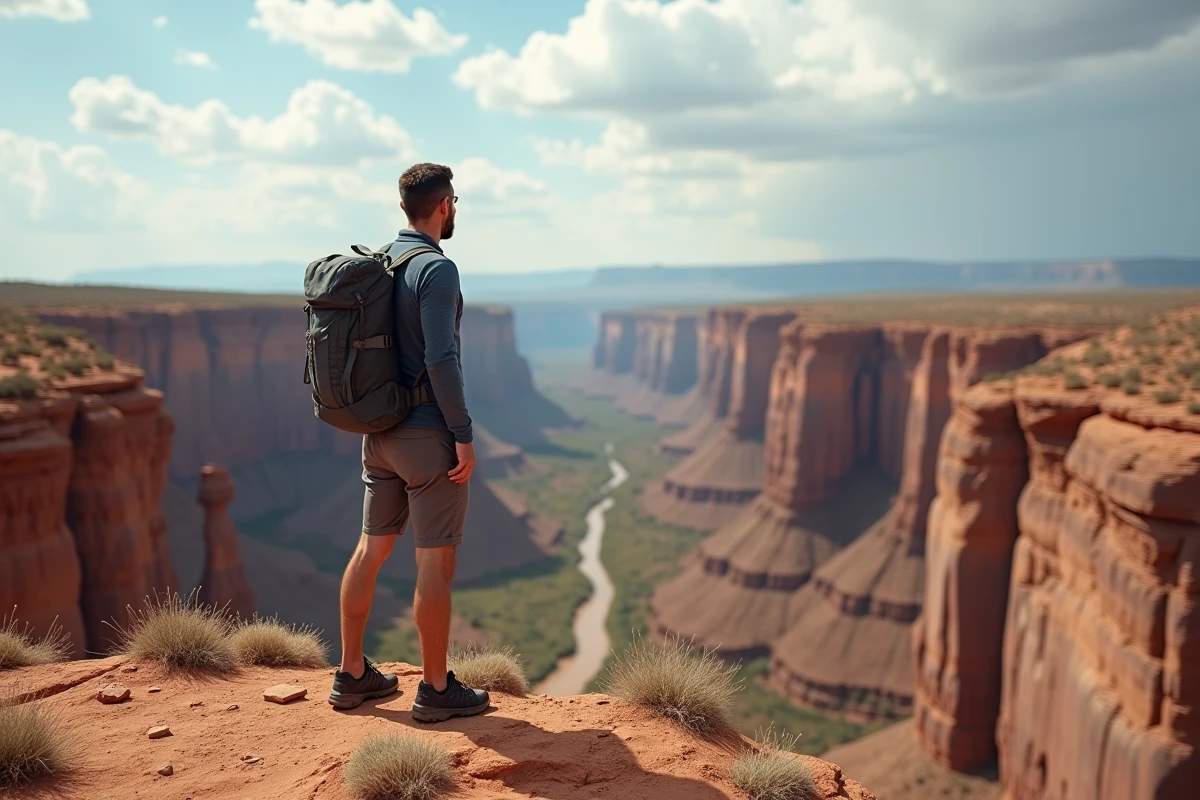
- High-altitude treks impose precise windows. The Everest Base Camp in Nepal is attempted in March-May or September-November. The W trek in Chilean Patagonia is done between November and March. Traveling off-season risks closed trails or dangerous conditions.
- Safaris in East Africa (Kenya, Tanzania) peak in interest during the great migration, between July and October. Booking a safari at another time does not guarantee the same wildlife observations.
Integrating these seasonality constraints into the overall itinerary prevents finding oneself in the wrong place at the wrong time, which remains the most common mistake of travelers who plan solely by destination without cross-referencing with the activity calendar.

Slow world tour: when flight restrictions reshape activities
Several countries on classic itineraries have tightened their domestic transport policies, making some air travel more expensive or less frequent. Indonesia, Thailand, and New Zealand are among the destinations where this evolution pushes travelers to rethink their way of moving around.
The result: “slow world tours” where the journey becomes the activity. Crossing Java by train rather than by plane, connecting Christchurch to Queenstown by campervan, traveling up the Thai coast by ferry and local bus. These choices extend the duration of each stage but transform the journey into a cultural experience, with encounters and discoveries impossible from a window seat.
The appreciation of this slowness varies according to profiles: some travelers find it frustrating when time is limited, while others claim that these journeys constitute their best memories. The total duration of the trip plays a determining role. With less than six months, slow travel requires drastically reducing the number of countries visited.
Visas and activity budget: two often underestimated constraints
The budget allocated to activities is a line item that many world travelers miscalculate. A diving baptism, a skydiving jump in New Zealand, or an excursion in the Atacama Desert do not cost the same as a day of free visiting in a temple.
The issue of visas also interferes with the choice of activities. Some countries limit the length of stay to a few weeks without a visa (most Southeast Asian countries grant between two and four weeks), which reduces the available window for long activities like multi-day treks or local cooking classes.
Cross-referencing the visa calendar with that of desired activities helps avoid two pitfalls: paying for an unnecessarily expensive extended visa or leaving a country before being able to do the activity that justified the stop.
A successful world tour is not one that accumulates the most stamps in a passport. It is one where each stop has been chosen for a specific activity, aligned with the right season, with a realistic budget and a visa suited to the necessary duration.