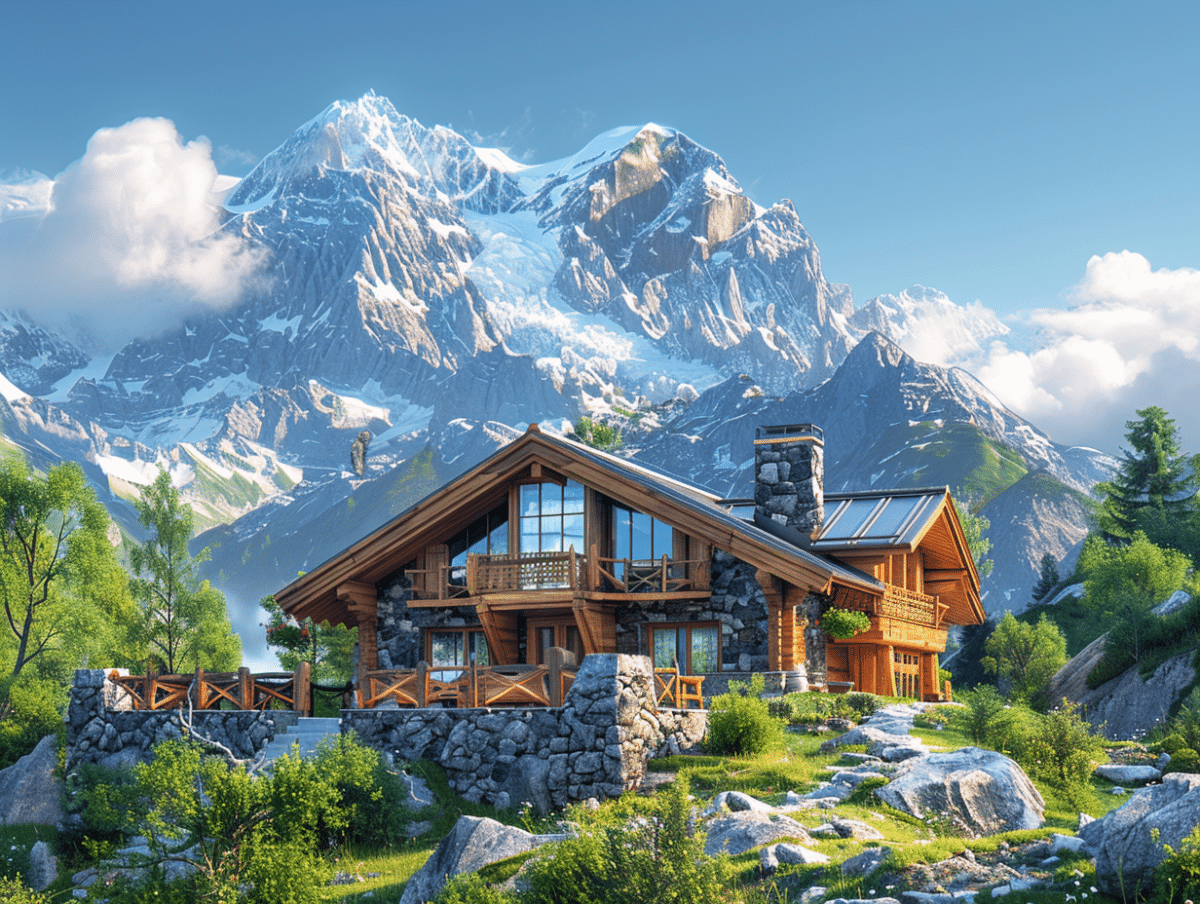
Alpine villages, with their sloping roofs and wooden facades, tell a story shaped by centuries of adaptation to the harsh mountain climate. Over time, these traditional dwellings have evolved, integrating modern materials and techniques while preserving their characteristic aesthetic. Alpine architecture stands at the crossroads of heritage respect and innovation, seeking to address new ecological challenges and contemporary comfort needs.
From Traditional Harmony to Innovation: Alpine Architecture Through Time
Since the 18th century, alpine architecture has been distinguished by its slate roofs, perfect for withstanding snow accumulation. Local materials, such as larch wood and stone, define an architectural style in perfect harmony with the natural environment of the Western Alps. Buildings, often grouped in hamlets, offer a robust and warm aesthetic, characteristic of mountain shelters.
The advent of the 19th century and the rise of tourism launched a new dynamic. Ski resorts, such as Morzine and Les Gets, evolved from ancestral villages, transforming these places into internationally renowned winter sports centers. The integrated second-generation resorts, born before and after the world war, such as La Clusaz and Serre-Chevalier, represent a revolution in alpine architectural style, marked by the influence of René Faublée, a disciple of Le Même.
At the heart of the architectural experiments of the third generation, resorts like Flaine and Avoriaz stand out for their functional design at altitude, showcasing bold architectural singularities. These modern achievements, while breaking away from traditional forms, do not forget the essence of alpine architecture, combining tradition and modernity to create living spaces adapted to contemporary challenges.
Reconciling Regional Identity and Contemporary Challenges: New Trends in Mountain Architecture
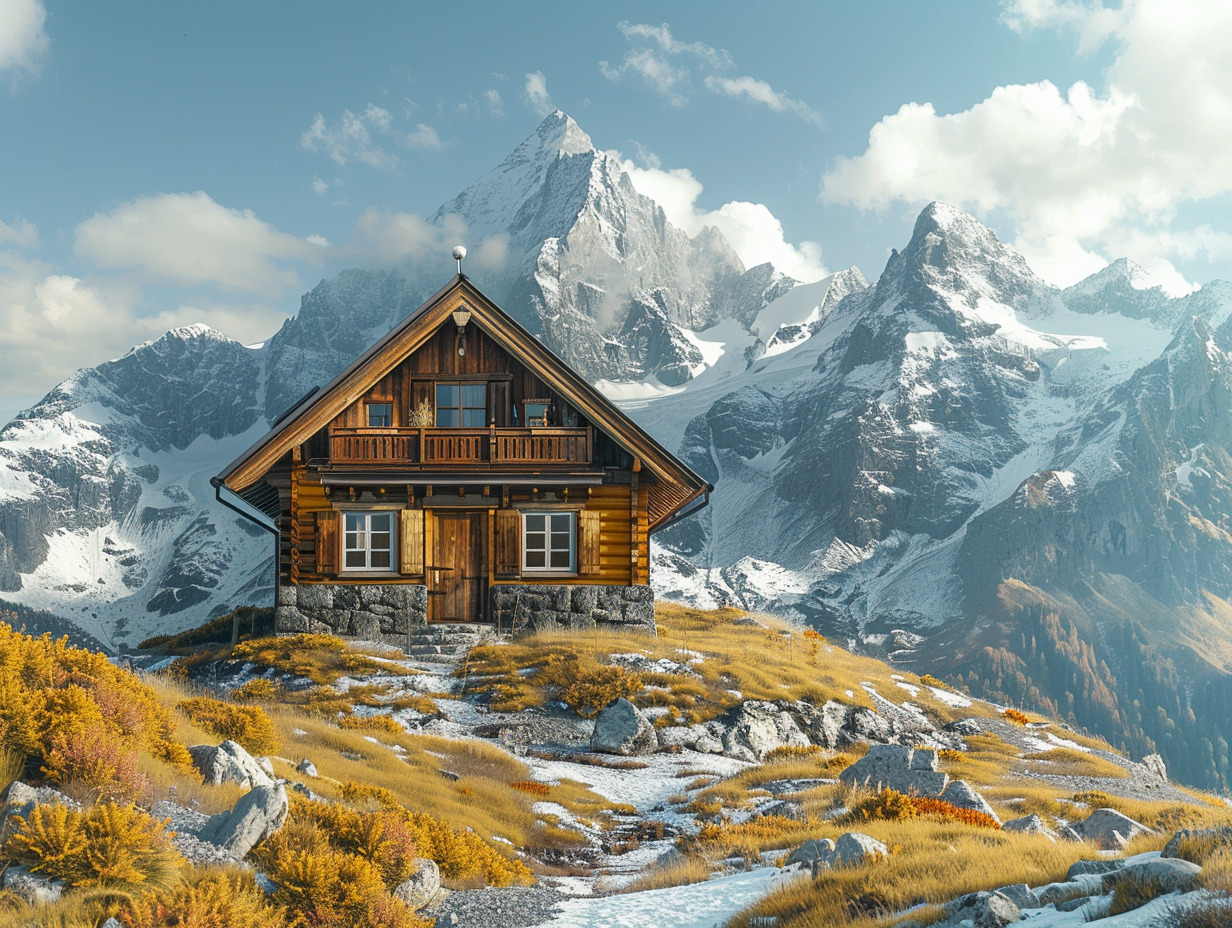
The new trends in mountain architecture aim to preserve regional identity while addressing contemporary challenges. Architects are now inspired by masters such as Le Corbusier or Walter Gropius to integrate modern materials like iron and glass, while respecting mountain aesthetic codes. The transparency brought by these new materials allows for capturing natural light and offering spectacular views of the alpine landscapes, while maintaining the warmth and intimacy characteristic of traditional chalets.
The Géographie Alpine review, as well as academic discussion spaces like Espace Disciplines Paris, highlight how architecture can transcend its own limits. These forums encourage a dialogue between local traditions and notions of innovation, pushing to rethink the boundaries of alpine architecture. This intersection of knowledge contributes to the development of projects that harmonize ancestral construction techniques with ecological requirements and modern functional needs.
Third-generation ski resorts, such as Tignes Val Claret or Val Thorens, perfectly illustrate this fusion of heritage and modernity. These vacation spots, designed for optimal functionality at altitude, showcase architectural singularities that reflect current dynamism and avant-gardism. These achievements, while rooted in the mountain context, demonstrate a desire to create sustainable living spaces integrated into their environment, thus providing a concrete and aesthetic response to the challenges of our time.