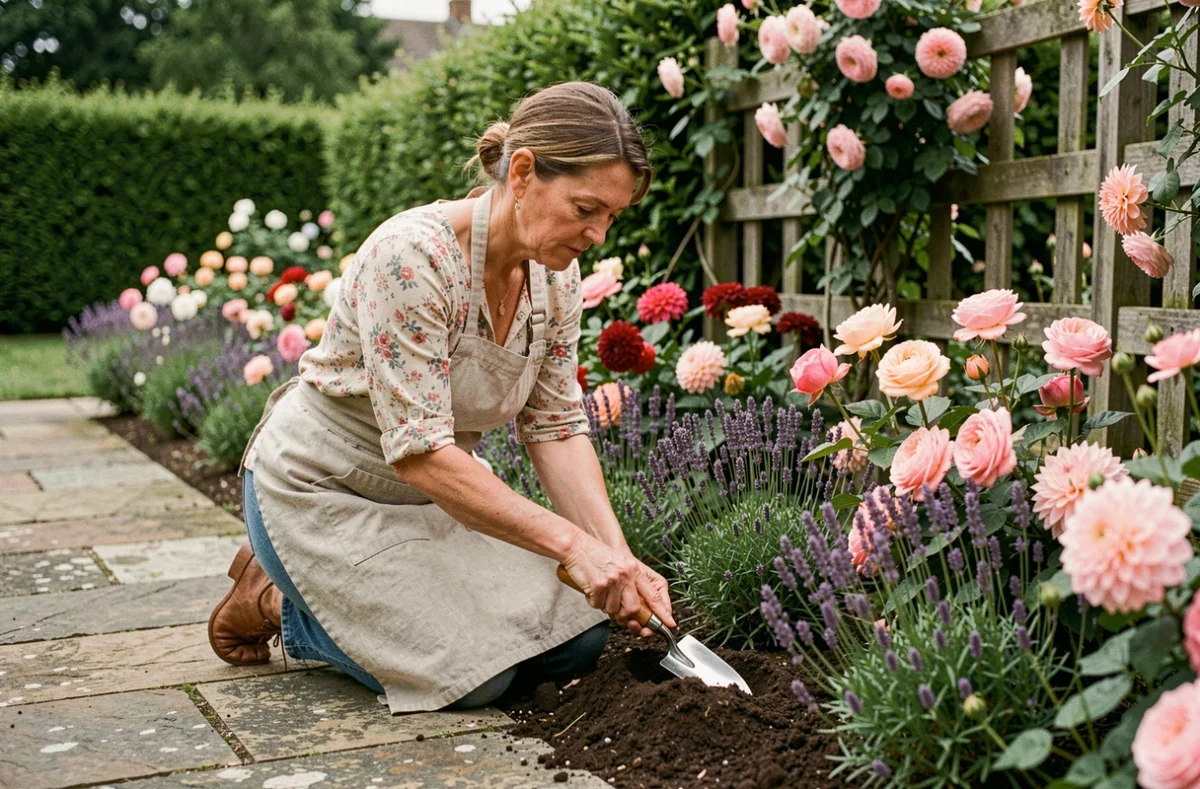
A garden that remains colorful from January to December is based on a simple principle: spreading bloom times while limiting maintenance and water consumption. Choosing flowers suited to your climate, soil, and local pollinators allows you to maintain a vibrant garden without excessive effort. Here’s how to achieve this concretely, starting from the most often overlooked constraints.
Flowering garden and water-efficient: the duo that changes everything
You may have noticed that a spectacular flowerbed in June can become bare and dry soil by August? This phenomenon has a name among landscapers: the “bloom gap.” It occurs when too many spring-flowering plants are concentrated without planning for what comes next.
To avoid this dip, the reasoning starts from the calendar. Each month should have at least two or three species in bloom. Perennials like yarrow, shrub sage, or gaura bloom for a long time and require little watering once established.
A mulched soil reduces evaporation and nourishes the earth as it decomposes. Wood chips, hemp straw, or shredded leaves form a protective layer that significantly decreases water needs. This action, combined with the choice of drought-resistant plants, allows for a flowering garden even during dry summers.
To explore varieties suited to each season, the flowers on Tradition Jardin offer a selection that facilitates the planning of sustainable flowerbeds.
Native plants and pollinators: a garden that serves
A flowering garden all year round has more than just a decorative function. It can become a refuge for pollinating insects, provided the right choices are made.
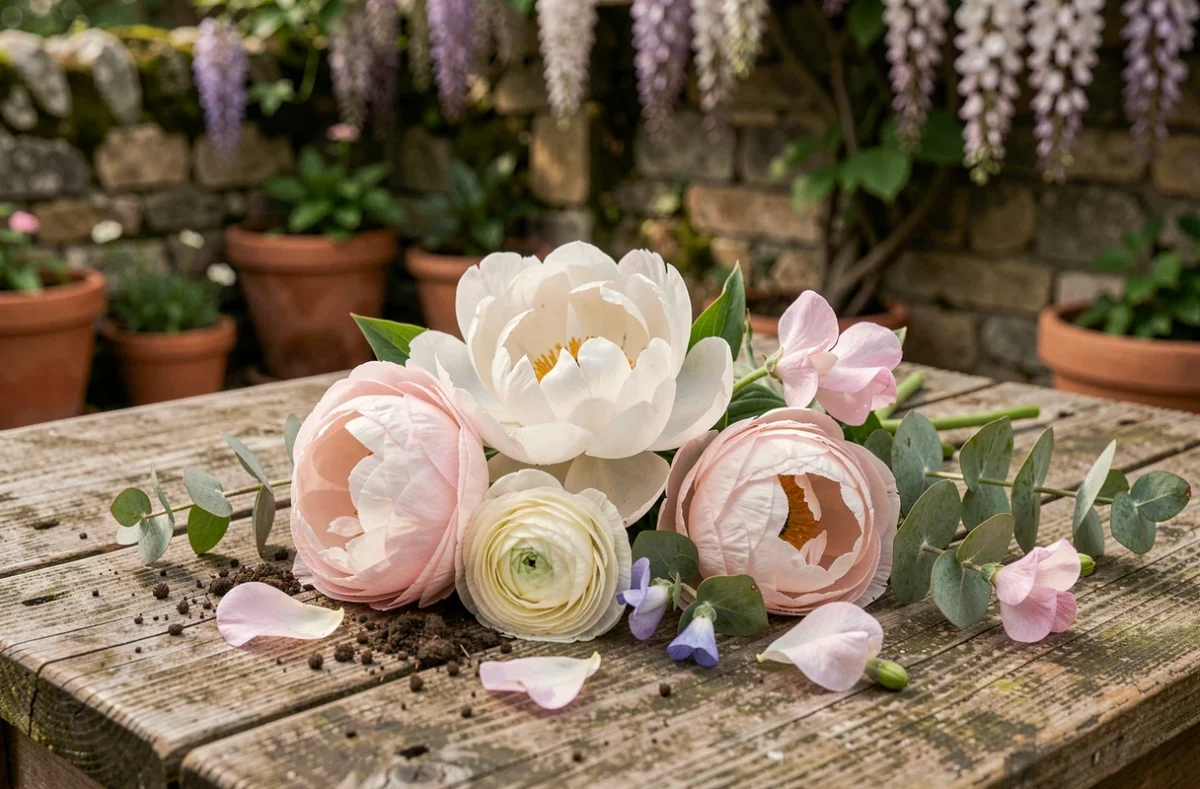
Planting so-called “nectar-rich” flowers is not always enough. Some horticultural varieties with double flowers, for example, produce little nectar or make pollen inaccessible to bees. Favoring simple flowers with open corollas makes it easier for pollinators to work.
L’Ami des jardins recommended in 2026 to choose native plants from locally collected seeds. Why this precision? The same species, grown from seeds from another region, may bloom at a different time compared to the cycles of local insects. The ecological benefit is thus reduced.
Three criteria for selecting your flowers in favor of biodiversity
- Simple and accessible flower: petals should not create an obstacle for insects. Poppies, simple cosmos, or echinaceas fulfill this role.
- Staggered flowering between species: combining a hellebore (winter), borage (spring-summer), and an aster (autumn) ensures a continuous food resource for pollinators.
- Local seed origin: sourcing from regional seed producers strengthens the adaptation of plants to the soil and climate.
This type of garden also attracts beneficial insects for the vegetable garden. Hoverflies, ladybugs, and lacewings, which consume aphids, find refuge in diverse flowering beds.
Invasive species in the garden: what European regulations say
Some decorative plants commonly found in garden centers are now on the list of invasive exotic species. European Regulation No. 1143/2014, updated with an entry into force on August 7, 2025, prohibits the planting and marketing of several species.
Before buying a plant, checking that it is not on the European list of invasive species avoids penalties and protects local ecosystems. The buddleia (butterfly bush), for example, is often cited as beneficial for pollinators while it spreads uncontrollably and impoverishes local flora.
Replacing these species with local alternatives does not mean giving up color. Lilacs, lavender, honeysuckle, or botanical roses offer generous and fragrant blooms, without risking biodiversity.
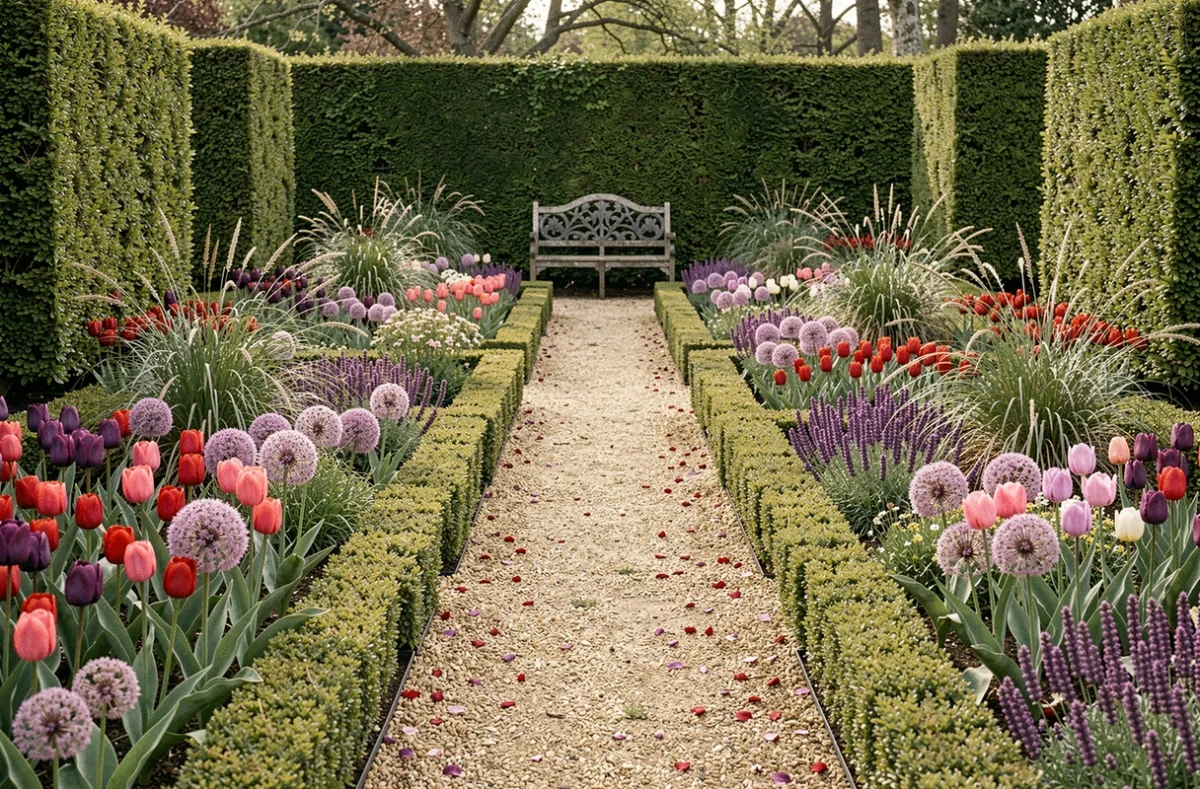
Designing flowering beds all year round without creating a desert between two seasons
The classic trap is to fill a flowerbed with plants that bloom simultaneously. The result: three weeks of spectacle, followed by months of dry stems. The opposite method works better.
The layering technique of flowering
Imagine your flowerbed as a vertical calendar. At the ground level, early bulbs (crocuses, snowdrops) provide color from the end of winter. Above, medium perennials (perennial geraniums, nepetas) take over in spring and summer. In the background, autumn-flowering shrubs (heptacodium, caryopteris) close the season.
Stacking three height levels and three blooming periods in the same flowerbed eliminates the seasonal gap.
The role of evergreen foliage
Foliage is not just a secondary decoration. In winter, when most flowers are absent, ornamental grasses (miscanthus, stipa) and evergreen shrubs (eleagnus, photinia) maintain visual structure. They prevent the impression of an empty garden that discourages many gardeners.
- Include at least one evergreen foliage per flowerbed to retain volume in winter.
- Leave the dry stems of perennials in place until the end of winter: they shelter insects and add graphic interest to the garden.
- Incorporate dead wood or a pile of leaves in a discreet corner, as these elements host beneficial auxiliary fauna all year round.
A flowering garden all year round relies as much on structure as on the flowers themselves. Unmown areas, diverse hedges, and mulched soils create a vibrant mosaic, even between two blooms.
Rather than aiming for a permanent floral display, accepting that each season has its own rhythm makes the garden more resilient. The bright colors of summer give way to the coppery hues of autumn, then to the frosted silhouettes of winter. It is this succession that gives the garden its depth, much more than a forced bloom twelve months a year.