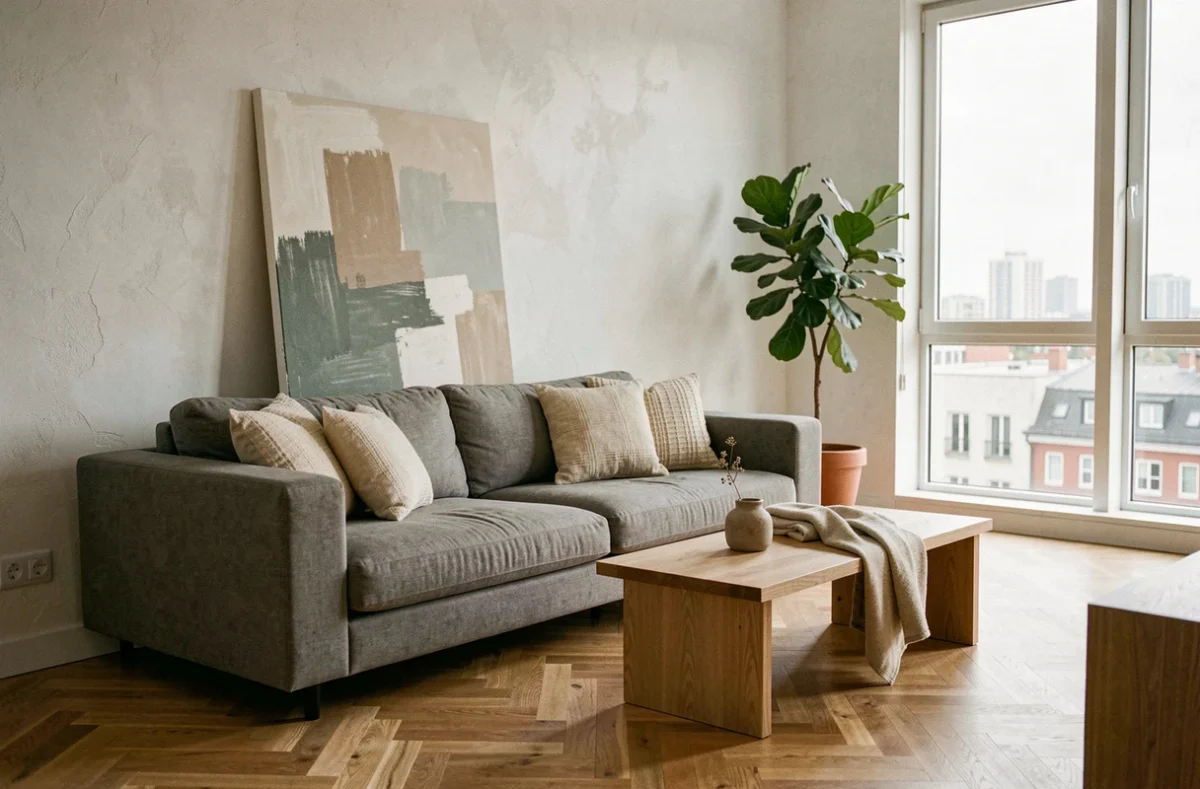
A corduroy sofa against a white wall, a walnut coffee table, a brass pendant light hanging above. Sometimes, three elements are enough to transform a mundane living room into a space with character. Modern decoration does not rely on accumulation, but on the coherence between a few strong choices. Here’s how to create an elegant interior without falling into an impersonal catalog.
Rounded furniture and organic shapes: the shift in modern style
Have you noticed that strict rectangular sofas are gradually disappearing from showrooms? Straight lines and cold minimalism are giving way to furniture with rounded and enveloping volumes. Half-moon armchairs, oval tables, shelves with curved edges: these organic shapes, inspired by the 1970s, soften a room without taking away its contemporary feel.
This shift changes the way we think about layout. A sculptural armchair placed at an angle creates a focal point more effectively than a coordinated three-piece set. The recent trend is moving towards a logic of “strong piece”: focusing the budget on one or two remarkable elements, then organizing the rest of the space around them.
An imposing light fixture above a stone table, for example, gives direction to the entire room. The rest of the furniture can remain understated. This approach avoids the need to renew everything at once and makes each choice more thoughtful.
To delve deeper into these principles and find additional inspiration, explore the decor on the SIA Architecture website, which details several design choices suited to current interiors.
Contrast of materials: wood, metal, and textiles in the same room
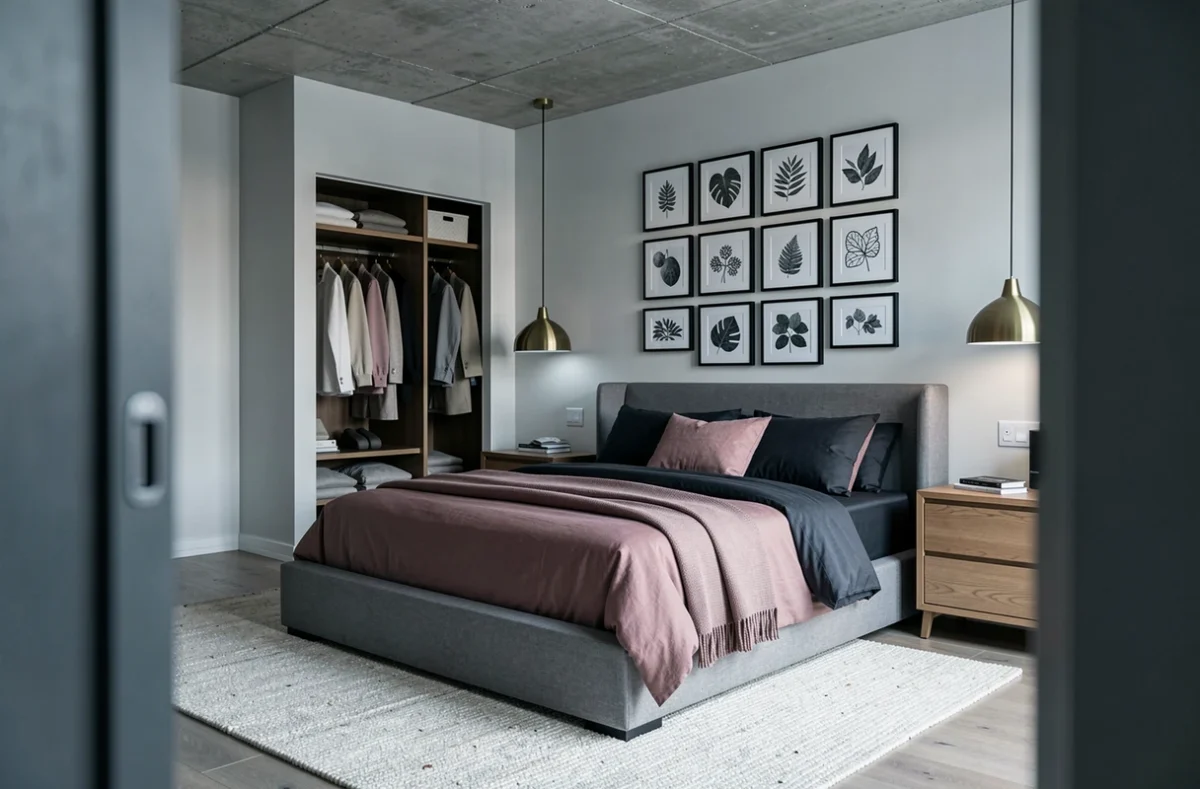
The coordinated “total look” (all white, all light wood, all gray) results in a clean but often bland outcome. Recent trends favor mix and match: combining very different materials to create a controlled contrast.
In practical terms, this means juxtaposing matte and shiny surfaces, natural and technological textures. A raw wood table with chrome metal legs. A textured plaster wall facing a brass-framed mirror. A thick wool rug under a transparent acrylic chair.
Successful combinations for a living room or kitchen
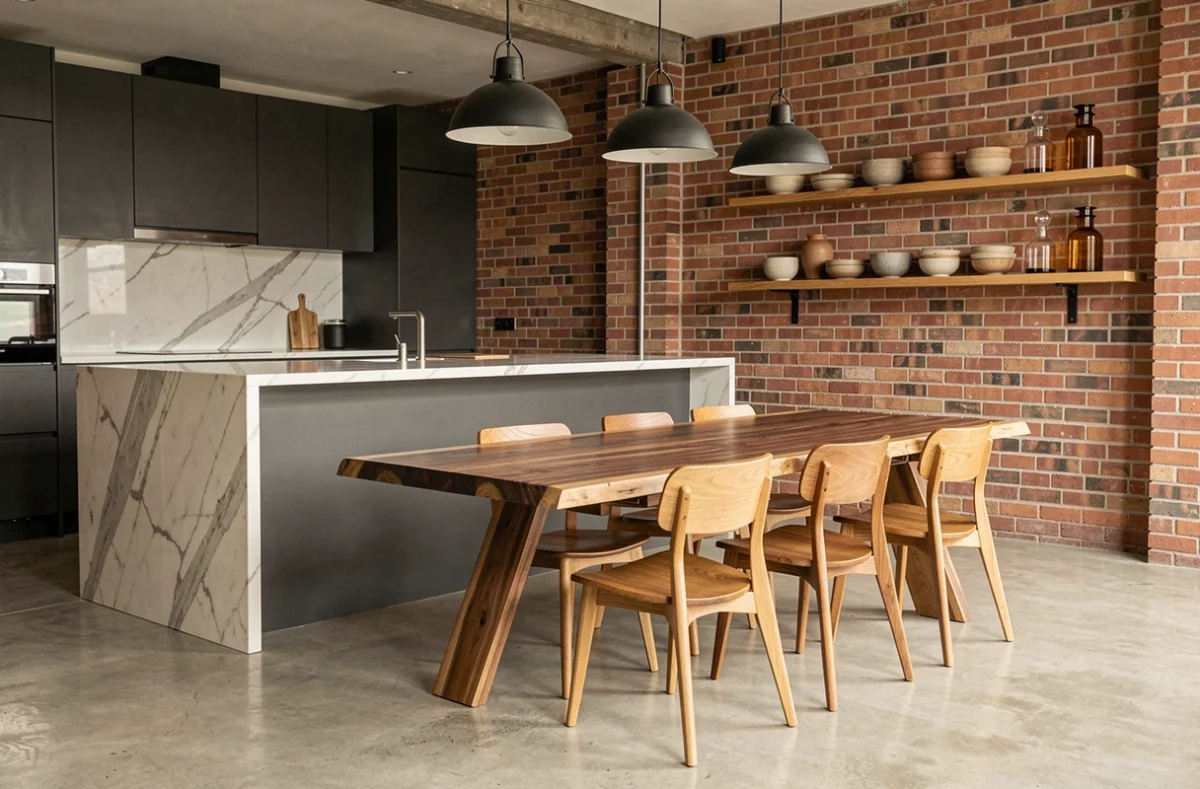
- Walnut wood and matte black metal: walnut adds warmth, while metal structures the whole without weighing down the room
- Glass and textured fabric: a glass coffee table combined with boucle cushions creates a dialogue between lightness and comfort
- Natural stone and chrome: a stone kitchen countertop paired with chrome handles gives a modern look without appearing clinical
- Raw linen and lacquered surfaces: the contrast between the nonchalance of linen and the sharpness of a lacquered piece avoids monotony
The practical rule: in each room, aim for at least three different material families. No more than five, otherwise the space becomes cluttered.
Color in modern decoration: moving beyond all-white
White remains a safe choice for visually enlarging a space and diffusing light. However, an entirely white interior lacks depth. Modern decoration incorporates color in a targeted way, in blocks rather than scattered touches.
An accent wall in a living room, for example, is enough to structure the space. Earthy tones (terracotta, sage green, ochre) pair well with wood and natural materials. One colored wall has more impact than five colored accessories scattered throughout the room.
Applying color without overwhelming
Start with the largest textile element in the room: the sofa or the rug. Its color sets the tone. Then, choose a wall or a piece of furniture that picks up this shade, in a lighter or darker version. The rest can remain neutral.
In a bathroom, a colorful tiled backsplash transforms the space at a low cost. In the kitchen, an island painted in a bold color (navy blue, forest green) anchors the modern style while remaining elegant.
Vintage and upcycling in contemporary decor
Integrating an antique piece into a modern interior is not a compromise: it is what makes a space unique. A restored 1960s sideboard in the middle of a minimalist living room creates a visual tension that new furniture alone cannot produce.
Second-hand items have become an aesthetic lever, not just an ecological one. Recent sources emphasize that the result largely depends on the finishes used during transformation. A thrifted piece simply repainted with unsuitable paint loses all its appeal. Matte varnishes, satin lacquers, or natural waxes make the difference between a successful makeover and a haphazard DIY project.
The most effective approach: choose a vintage piece with a strong silhouette (tapered legs, geometric lines) and restore it with contemporary finishes. The contrast between the era of the furniture and the current treatment of its surface yields a result that cannot be found in any catalog.
Light and decoration: what truly changes the ambiance of a room
Natural light remains the primary factor in ambiance. Before buying any light fixture, observe how light enters each room throughout the day. A north-facing living room is not decorated the same way as a sun-drenched living room in the afternoon.
For artificial lighting, multiplying light sources at different heights creates a much richer effect than a single ceiling fixture. A reading lamp next to the sofa, an arc floor lamp in a corner, wall sconces in the hallway: each light point carves out the space and creates distinct areas.
The light fixtures themselves become decorative objects. A rattan pendant above a dining table, a black metal floor lamp in a reading corner: these pieces contribute to the style as much as to the lighting. The choice of color temperature also matters. Warm white bulbs are suitable for the living room and bedroom. More neutral tones are better suited for the kitchen and bathroom.
A modern and elegant interior is not built by following a list of trends. It arises from a few carefully made decisions: a strong piece of furniture, a contrast of materials, a well-placed color, and thoughtfully zoned lighting. The rest is useful emptiness, the kind that allows each choice to breathe.