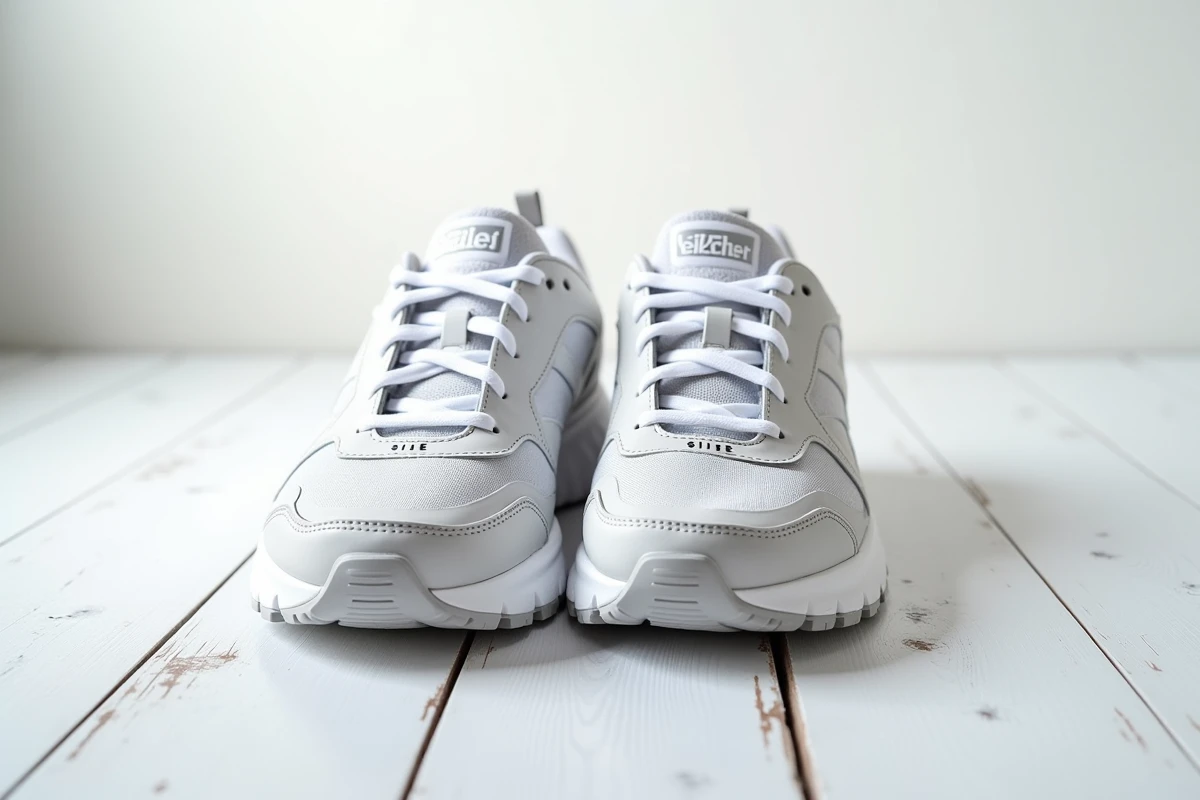
We order a pair of Skechers Arch Fit from a discount website, receive it in ten days, and right from the first fitting something seems off: the sole feels stiff, the logo appears slightly misaligned. This scenario has been multiplying since counterfeits have targeted models with bulky soles, particularly the Arch Fit, Max Cushioning, and Go Walk ranges. Knowing how to distinguish an authentic pair from a copy relies on precise checks that can be done without specialized equipment.
Insole and foam: the first test to do at home
Before looking at the seams or packaging, we remove the insole. On an authentic Skechers, the foam returns to its shape within seconds after pressing with a thumb. Recent counterfeits mimic the thickness of the insole but not its density: the foam remains compressed or rebounds unevenly.
The underside of the insole bears a printed marking (size, reference, country of manufacture). On a copy, this marking is often stuck as a sticker or printed with smudgy ink. We also check the alignment: the text must be centered and perfectly straight, without any misalignment with the edges.
On Arch Fit models, the molded arch support is a reliable indicator. It forms a firm and symmetrical bulge under the foot. Copies often feature a flattened bulge, sometimes misaligned by several millimeters inward. If we have a guide on how to verify original Skechers, these insole details are among the first criteria listed.
Label on the tongue and Skechers box: details that reveal a copy
The label sewn inside the tongue contains several verifiable pieces of information. On an authentic pair, you will find the size in three systems (US, UK, EU), the style number, and a scannable barcode.
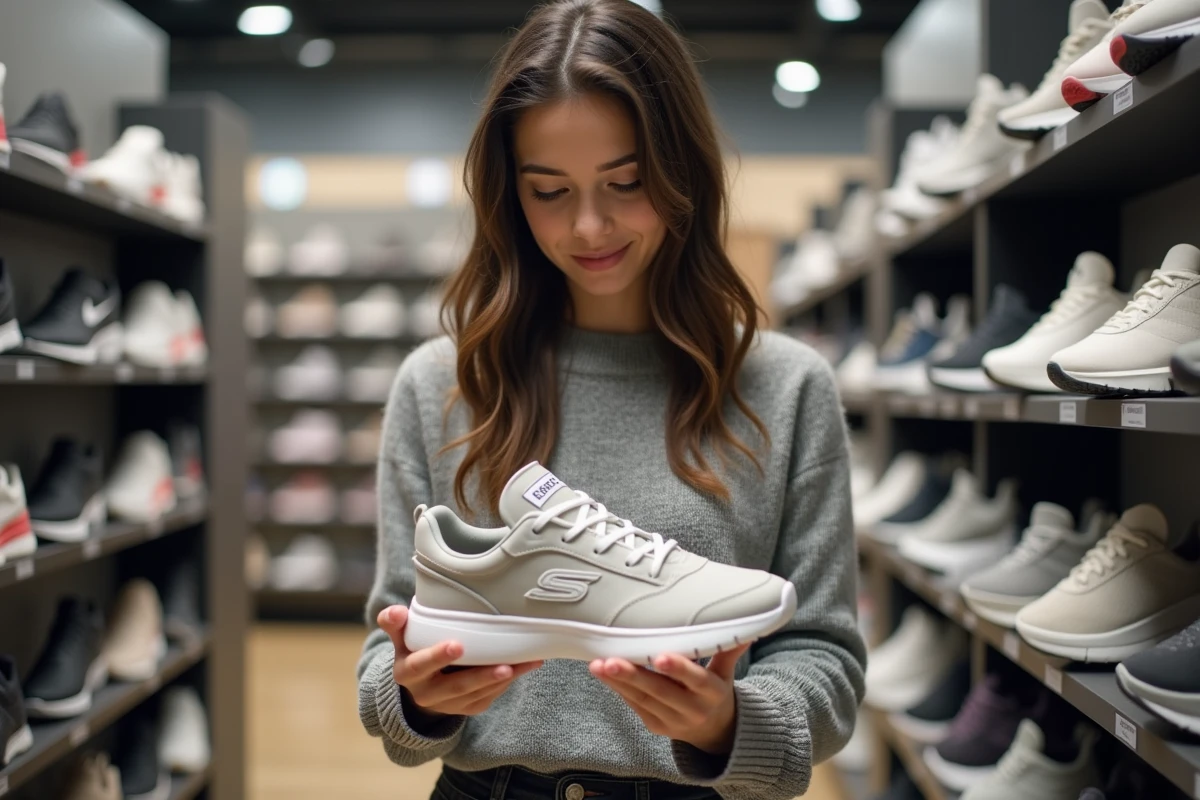
- The style number on the label must exactly match the one printed on the side of the box and on the sticker of the outsole. Any discrepancy indicates a problem.
- The font on original Skechers is sharp, with regular spacing. Counterfeits often use a thicker or slightly condensed font.
- The “S” logo on the tongue is embossed on current models. On copies, the logo is often printed flat or embroidered with thread that is too thin.
The box itself provides clues. Official Skechers boxes have a side sticker with the barcode, color reference, and size. The printing is matte and uniform. Counterfeits often feature thinner cardboard, shiny printing, or a repositionable sticker (originals are firmly glued).
Check the retailer before buying Skechers online
The majority of counterfeits circulate through unauthorized websites. Skechers provides a store locator and a list of authorized retailers on its regional sites, including for France. Consulting this list before placing any order eliminates most risks.
Some warning signs on a merchant site:
- Permanent discounts far exceeding usual sales, applied across the entire range without distinction of model.
- The absence of complete legal notices (SIRET number for a French site, verifiable physical address).
- Product photos identical to those on the official site but with a different watermark or lower resolution.
- A domain name that mimics Skechers with subtle spelling variations (double letters, added hyphen).
General marketplaces are not without risks. Even on well-known platforms, it is advisable to prioritize sellers identified as “official seller” or with a verifiable sales history. Feedback varies on this point, but several buyers report that the most convincing copies come from third-party sellers on these platforms.
Stitches, glue, and finishes: quick inspection of a suspicious pair
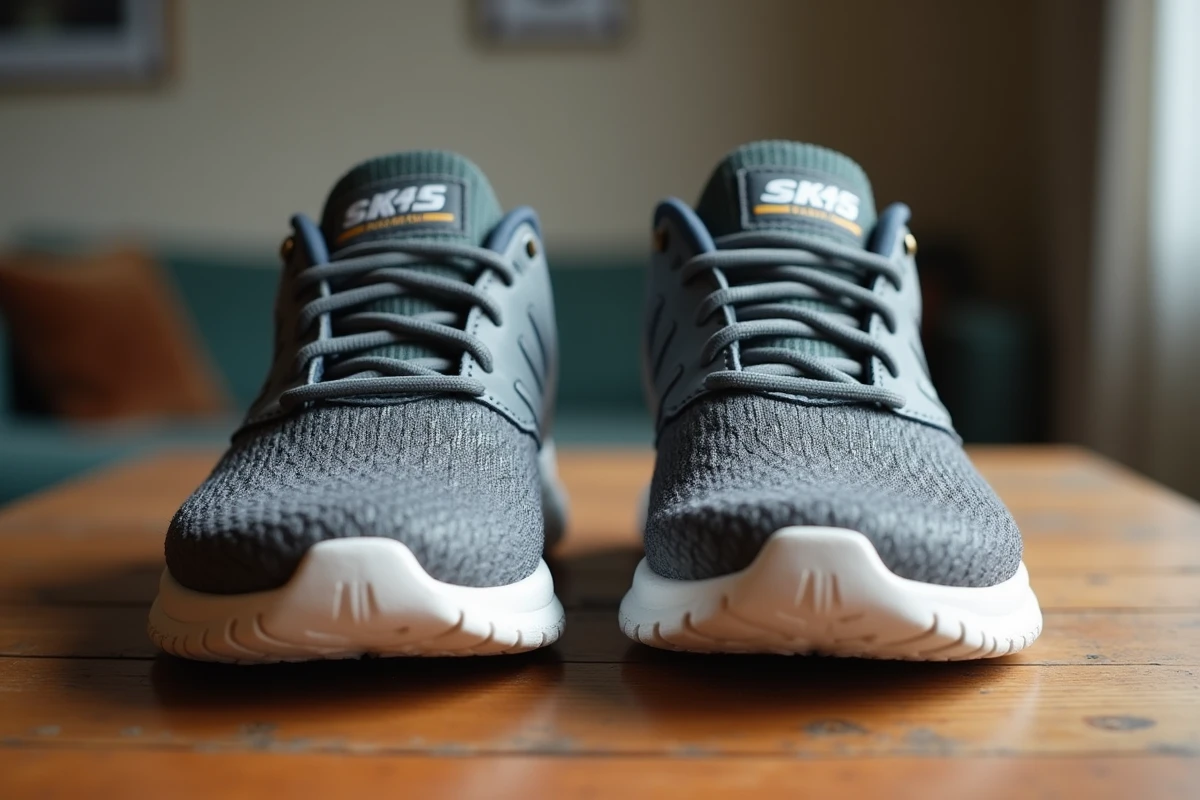
Manufacturing finishes remain the hardest marker to replicate. On an authentic Skechers, the stitches follow a regular line with a constant stitch length (distance between each stitch). Particular attention should be paid to the junction between the upper and the sole: no glue overflow should be visible to the naked eye.
Counterfeits often exhibit loose threads at the junctions, irregular zigzag stitching, or yellowed glue traces on the edge of the sole. On mesh models (breathable fabric), the mesh of an original pair is uniform and supple. Copies use a stiffer mesh, with unevenly sized holes.
A lesser-known detail concerns weight. Skechers sole technologies (Ultra Go, Hyper Burst) are designed to be lightweight relative to their volume. A copy with a thick but abnormally heavy sole betrays low-quality filler material. Comparing the weight with that indicated on the product sheet of the official site, when this data is available, helps to clarify any doubts.
The concentration of counterfeits on technical lines (Arch Fit, Max Cushioning, Go Walk) is explained by their popularity and higher selling price. Basic models of the brand are significantly less copied. Keep this information in mind when purchasing: the more technical and sought-after the model, the more vigilance on the verification points must be rigorous.